

From joblessness to Agribusiness: Youth awareness and participation in grass-cutter (Thryonomys swinderianus) farming in Ondo State, Nigeria
Abstract
This study assessed the awareness and participation of young people in grasscutter (Thryonomys swinderianus) farming as a means of addressing unemployment in Ondo State, Nigeria. The specific objectives included: determining awareness levels, identifying factors influencing participation, and analyzing employment challenges. A multistage sampling technique was used to select 206 respondents; data were analyzed with descriptive statistics and logistic regression. Results showed that, although 69.9% had heard of grasscutter farming, only 26.7% had received formal training, indicating a large awareness-practice gap. Major challenges reported included lack of capital (53.9%) and inadequate skills (25.7%). Remarkably, only 0.5% cited limited access to loans as a constraint, while 19.9% identified lack of opportunities. Logistic regression analysis revealed that youths earning over ₦50,000 monthly were 3.12 times more likely to participate in grasscutter farming than those earning below ₦20,000 (p < 0.05). Also, respondents aged 18–30 were significantly more likely to partake than older counterparts (Odds Ratio = 2.78, p < 0.05). Surprisingly, respondents without farmland were twice likely to engage in grasscutter farming than those with access to land (Odds Ratio = 2.04, p < 0.05), signifying flexibility in rearing systems .These findings emphasize the need for specific solutions, particularly access to capital, vocational training, and awareness, to promote youth engagement in alternative agribusiness ventures and reduce unemployment.
Introduction
The youth population is universally recognized as the strength for nation growth, development, and socio-economic change (Omarova et al., 2024). Young people are known by their energy, originality, flexibility, and potential for innovation, all of which are essential for productivity and economic advancement (Khan et al., 2024). Globally, over 1.2 billion people, or 16% of the world's population, are between the ages of 15 and 24 (Herrmann, 2022). In Sub-Saharan Africa, the youth sector is noticeable, with projections estimating that by 2030, 42% of the world’s youth will reside in Africa (Cieslik et al., 2022). This youth bulge, if well harnessed, can offer a distinctive demographic dividend capable of forcing continuous economic growth and poverty decrease. In Nigeria, the youth population is not simply large but growing fast. According to the National Population Commission (NPC, 2019), over 60% of the Nation’s population is below 30, with persons aged 15–35 constituting almost 35% of the populace, amounting to well over 70 million people. This statistics sets youth at the center of Nigeria’s present and future development agenda. However, getting to achieve this prospect is reliant on the nation’s ability to provide suitable chances for education, skills development, and gainful employment.
In spite of Nigeria’s abundant human and natural resources, the country continues to struggle with high levels of youth unemployment and underemployment, which impend its socio-economic progress, intensifying poverty, insecurity, rural-urban migration, and societal lack of expectations. Mishi et al. (2022) point out that youth unemployment was as high as 42.5%, with an additional 21% of young people underemployed, showing a dire need for workable and comprehensive livelihood possibilities. This problem is more prominent in rural and semi-urban areas, where restricted access to formal employment, poor infrastructure, and declining public sector job availability have left many young people economically vulnerable.
In recent years, the scope of agricultural enterprise has extended beyond traditional crop farming to include more advanced and scalable agribusinesses (Kansiime et al., 2025). These include aquaculture, poultry farming, rabbit rearing, and increasingly, grass-cutter (Thryonomys swinderianus) farming, also known as cane rat production. Grass-cutter farming, specifically, has gained attention for its low start-up costs, fast reproductive cycle, minimal space requirements, and high market demand for its meat, which is thought of as a delicacy in many parts of West Africa (Ayariga, 2022). Grass-cutter meat, is mostly cherished for its high protein content, usually between 19% and 22%, making it an exceptional source of essential amino acids desirable for body growth, tissue repair, and immune function. Besides its protein richness, grass-cutter meat is low in fat and cholesterol, which makes it a healthier substitute to red meats such as beef and pork, mainly for individuals worried about heart condition (Asuquo et al., 2024). Additionally, grass-cutter meat is rich in vital micronutrients such as iron, zinc, phosphorus, and B vitamins (especially B12 and niacin), which are needed for metabolic processes, red blood cell formation, and energy production. Its fine muscle fiber configuration also makes it easily digestible, suitable for all age groups including children and the elderly. Unlike pork or beef, grass-cutter meat faces no major religious or cultural restrictions, making it widely acceptable and marketable across different communities in Nigeria. These nutritional benefits place grass-cutter meat as not only a healthful food source but also a strategic element in addressing undernourishment and encouraging food security, especially in low-income and rural populations.
Historic records trace the domestication and commercialization of grass-cutters in West Africa to the 1980s, when research institutions such as the Centre Suisse de Recherches Scientifiques (CSRS) in Côte d’Ivoireand Nigeria’s Institute of Agricultural Research and Training (IAR&T), Ibadan, began developing breeding methods and promoting grass-cutter farming as a source of income and protein (Obaniyi, 2022). In Nigeria, the potential for grass-cutter farming as a tool for youth empowerment is significant yet underutilized. Over 80% of meat consumption in sub-Saharan Africa is derived from small livestock and bush meat, with grass-cutters accounting for a growing share due to their perceived health benefits and taste (Kumar et al., 2023). However, youth participation in this sub-sector remains low, often due to reasons such as lack of awareness, cultural perceptions, limited access to finance and training, and weak policy support.
This calls for direct research into the drivers and obstacles of youth engagement in grass-cutter farming. By evaluating the awareness levels, attitudes, and participation of young people toward grass-cutter production, governments, development organizations, and agricultural investors can support the interests and realities of the youth population group, to this end the following specific objectives were assessed in this study, to access the level of awareness among youth; to determine the factors influencing youth participation in grass cutter farming; and to identify the challenges faced by youth in their efforts to become employed.
Material and Methods
Study population and sampling techniques
The population of this study is comprised of youths in Ondo State, Nigeria. A multi-stage sampling technique was used for this study, giving rise to a total sampling size of two hundred and six (206) respondents.
Source of data
Data for this study was collected through the use of a well-structured questionnaire.
Data analytical techniques
The technique used for data analysis include: Descriptive statistics such as frequency counts, percentages, mean, inferential statistical tool such as Logistic Regression.
Results and Discussion
Respondents’ level of awareness of Grass-cutter farming in the study area
The findings reveal a multi-dimensional understanding of youth awareness of grasscutter farming in the study area. As shown in Fig. 1, 69.9% of respondents specified they had heard about grass cutter farming, suggesting a relatively high level of general awareness. This general recognition shows that grasscutter farming is not an unfamiliar concept among youth, aligning with Akinbile et al. (2022) who noted growing public knowledge of non-conventional livestock enterprises in Nigeria. However, awareness alone does not equate to detailed understanding or active participation.
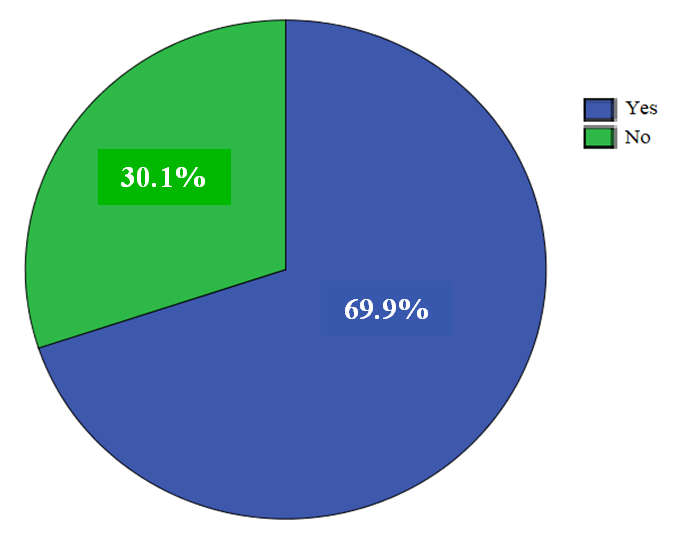
Fig. 1: Proportion of youth that have heard about grasscutter farming
As Fig. 2 illustrates, only 14.6% of respondents stated being very familiar with the practice, while 46.6% were somewhat familiar and 38.8% not familiar at all. This point to a critical gap between nominal awareness and experiential or technical familiarity. The effect is that although the enterprise is known, many young people lack sufficient exposure, training, or mentorship to confidently engage in it. This observation supports the findings of Olagunju et al., (2021) who underscored the need for youth-focused agricultural extension services to extend familiarity with non-traditional livestock practices. Likewise, awareness of grasscutter farming as a viable livelihood option appears to be cautiously optimistic.
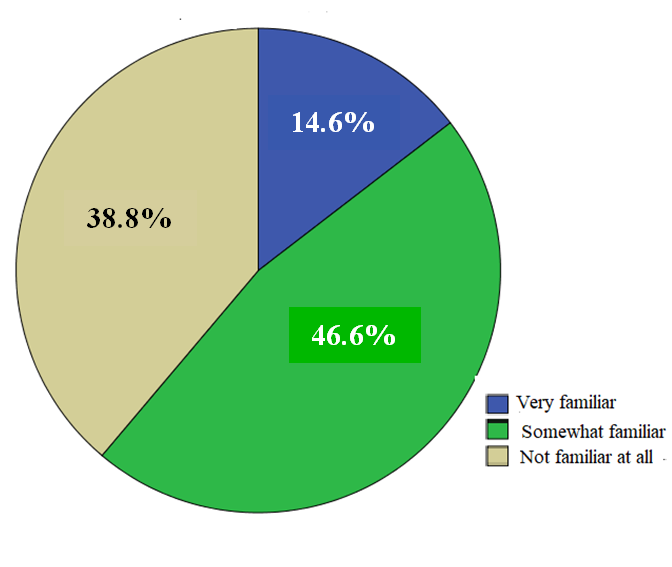
Fig. 2: Proportion of youth that are familiar with grasscutter farming
As presented in Fig. 3, 55.5% of respondents view grasscutter farming as a potential source of self-employment, while 29.0% are uncertain and 15.5% disagree with its viability. The inference here is twofold: even though majority recognizes its employment potential, a major proportion remains uncertain, likely due to poor visibility of successful models, lack of peer engagement, or perceived socio-cultural shame. This inconsistency is in line with Boye et al. (2024), who stated that youth awareness of agricultural ventures are often shaped by insufficient role models and inadequate policy support. The limited exposure to capacity-building opportunities further strengthens this indecision.
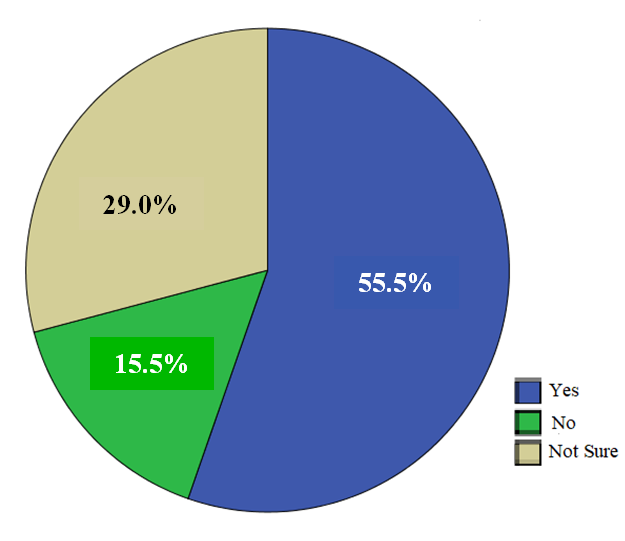
Fig. 3: Proportion of youth that view grasscutter farming as a potential source of employment
As shown in Fig. 4, only 26.7% of respondents had received any form of training in grasscutter farming, revealing a substantial gap in practical and technical knowledge. This lack of training directly hinders youths’ ability to shift from passive awareness to active engagement. It authenticates the conclusions of Nwachukwu et al. (2020), who argued that agripreneurship uptake among youth is conditional on targeted training programmes, especially in niche areas like small livestock farming.
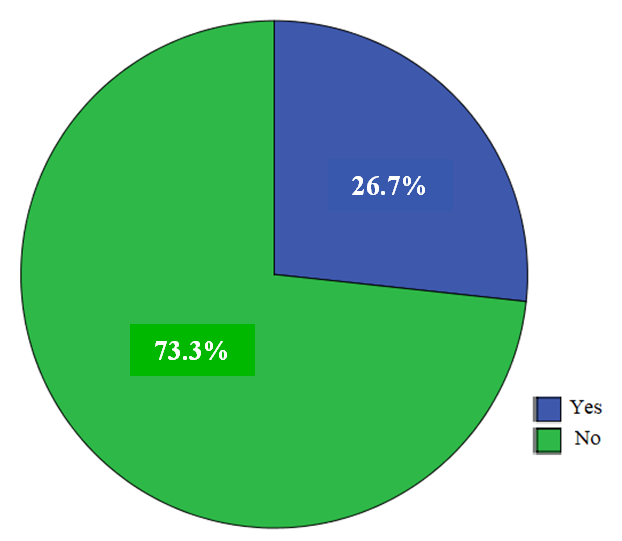
Fig. 4: Proportion of youths who received training on grasscutter farming
When asked about the profitability of grasscutter farming, 52.9% of respondents admitted its economic potential (Fig. 5). This hopefulness, despite low participation and training levels, mirrors a dormant entrepreneurial interest that can be harnessed through tactical planning. The implication is that youths may be willing to explore grasscutter farming if given adequate incentives, mentorship, and infrastructural support. These findings corroborate the work of Giwu and Mdoda, (2024), who identified profitability perception as a strong motivational factor in youth agribusiness decisions.
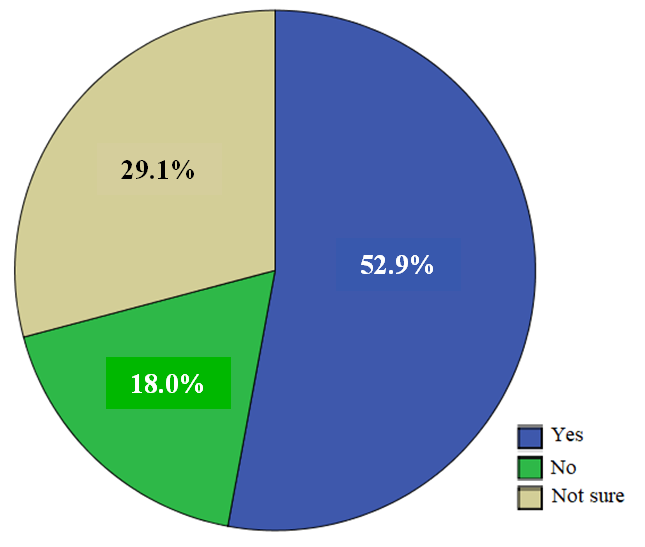
Fig. 5: Youths level of awareness regarding profitability of grasscutter faming
Factors influencing respondents’ participation in grass-cutter farming
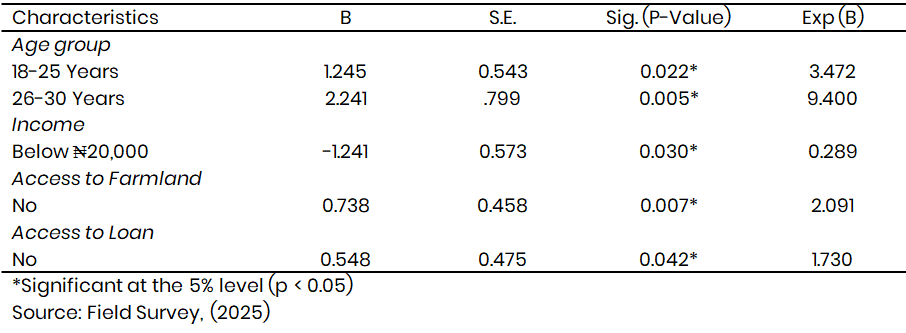
Table 1 presents the results of a binary logistic regression model employed to examine the socio-economic determinants of youth participation in grasscutter farming. The dependent variable, youth participation (Yes = 1, No = 0), was regressed on a range of predictors including sex, marital status, age group, education level, employment status, income level, household size, source of income, access to farmland, access to loans, and current agricultural involvement.
The results reveal that age is a statistically significant factor influencing youth engagement in grasscutter farming. Youths aged 18-25 years (B = 1.245, Exp(B) = 3.472, p = 0.022) and 26–30 years (B = 2.241, Exp(B) = 9.400, p = 0.005) are considered more likely to participate in grasscutter farming related to those above 40 years. This suggests that younger individuals are more willing to discover innovative agricultural ventures, possibly due to higher adaptability and fewer socio-economic commitments. These outcomes are consistent with Mensah et al., (2024), who found that younger folks reveal better ingenuousness to small-scale livestock production, including grasscutter rearing, due to its low startup capital and quicker returns.
Income level also significantly impacts participation. Respondents grossing less than ₦20,000 monthly (B = -1.241, Exp (B) = 0.289, p = 0.030) were considerably less likely to engage in grasscutter farming compared to those earning above ₦100,000. This indicates that very low-income youths may perceive even small-scale ventures like grasscutter farming as economically unsafe or unfeasible. This aligns with Nwachukwu et al. (2020), who stressed that monetary limitations are a major constraint to agribusiness entry among rural youth. Although income categories between ₦20,000 - ₦100,000 were not statistically significant, the negative direction of the coefficients suggests a steady pattern where increasing income supports a greater probability of participation.
Interestingly, access to farmland was positively and significantly associated with participation (B = 0.738, Exp (B) = 2.091, p = 0.007), demonstrating that youths without farmland access are twice as likely to involve in grasscutter farming matched to those with farmland. This is reasonable because grasscutter farming requires fairly less space and can be accompanied in backyard setups, making it more attractive to land-constrained individuals. This finding supports the study by Abdulai et al., (2023), who highlighted the suitability of micro-livestock farming for urban and peri-urban youth with limited land resources.
Similarly, access to loans demonstrated a statistically significant influence (B = 0.548, Exp (B) = 1.730, p = 0.042), with youths without access to loans being more likely to participate. This counter intuitive result may suggest that some youth adopt grasscutter farming precisely because it is one of the few agricultural enterprises that can be started with little or no external financing. This partially supports the assertion of Kadzamira et al., (2024) that youth often engage in low-capital agribusinesses due to the inaccessibility of formal credit systems. Overall, the model emphasizes that younger age, moderate income, lack of access to farmland, and absence of formal credit are important predictors of youth engagement in grasscutter farming.
Table 1: Binary logistics model for association between various characteristics and youth participation
Challenges faced by respondents in their efforts to become employed
Fig. 6 presents the main difficulties faced by youth in the study area to secure employment. The most commonly cited challenge was lack of capital, reported by 111 out of 206 respondents (53.9%). This highlights the critical role of financial constraints as a principal barrier to youth employment and self-employment. The consequence is that many young people are unable to start businesses or pursue income-generating activities due to insufficient funds. This is consistent with findings by Omolawal and Adeniyi (2024), who described that limited access to credit and start-up capital significantly impedes youth entrepreneurship in Nigeria. Without adequate financial resources, many viable business ideas remain unrealized, and the transition from unemployment to self-employment becomes highly constrained. The second most reported challenge was lack of skills, mentioned by 53 respondents (25.7%). This implies that a significant portion of the youth lacks the technical expertise, vocational training, and entrepreneurial competencies needed to thrive in today’s labour market. This supports the study by Pater et al. (2022), which point to a mismatch between the skills youth possess and the demands of the labour market. It also underlines the need for more directed, practical, and youth-accessible training programme to close this gap.
In addition, lack of opportunities was reported by 41 respondents (19.9%), replicating a bigger fundamental problem in the labour market. This discovery suggests that even when youth have the motivation and in some cases the skills, they often find it difficult to access job openings or entrepreneurial paths due to limited formal employment, poor infrastructure, or inadequate support systems. This observation is supported by Olubusoye et al. (2023), who note that structural unemployment, caused by a scarcity of suitable employment options, is a persistent issue affecting Nigerian youth. Remarkably, inadequate access to loans and grants was identified by only 1 respondent (0.5%). This may seem counterintuitive, considering the prominence of financial barriers. However, this finding could specify that many youth are either unaware of such opportunities, perceive them as inaccessible due to complex application procedures, or doubt formal financial institutions. It may also reveal low exposure to formal funding schemes, particularly in rural areas. Badejo et al. (2024) similarly found that many Nigerian youths prefer informal financing options or rely on family networks due to perceived inefficiencies in formal support systems.
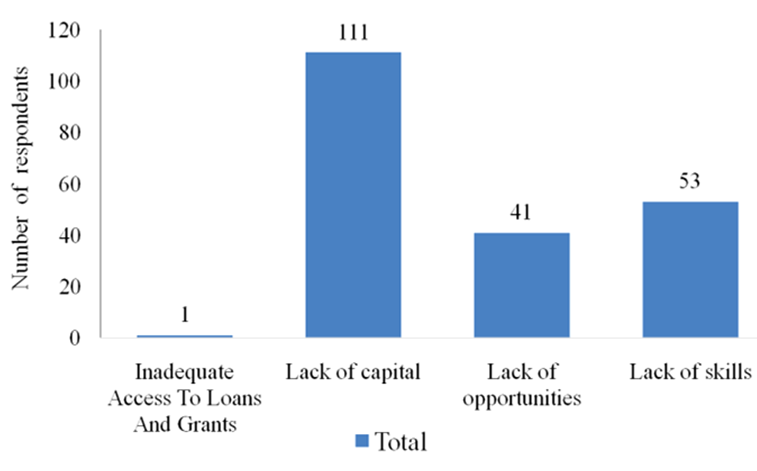
Fig. 6: Challenges faced by respondents in becoming employed
Conclusion
This study offers vital understandings into the factors influencing youth awareness and participation in grasscutter farming. The findings are in line with and, in some cases, deviate from existing literature, presenting both confirmations of accepted information and fresh viewpoints specific to the Ondo State, Nigeria. One of the most significant findings is the dominance of financial constraints, particularly lack of capital, as the leading barrier to youth employment, cited by over half of the respondents (53.9%). In contrast, inadequate access to loans and grants, which received minimal acknowledgment (0.5%) in this study, appears to deviate from earlier findings of Abudu et al. (2023) who reported that difficulty accessing credit facilities was a key hindrance for youth farmers in Edo State, Nigeria. This discrepancy could reflect regional differences in the availability or awareness of institutional financial programs, or it may suggest a preference among youths for informal funding mechanisms such as personal savings or family support, rather than formal loans.
Another prominent challenge identified was the lack of relevant skills, reported by 25.7% of respondents. With regard to awareness of grass cutter farming, the study revealed that while 69.9% of youth had heard of it, many lacked sufficient technical knowledge or exposure. This pattern reflects earlier findings by Ibrahim et al. (2021), who noted that while awareness of agricultural innovations may be relatively high, actual adoption and practice remain low due to inadequate training and support. Furthermore, the finding that younger respondents were more likely to be aware of grasscutter farming supports Mount’s, (2021) conclusion that younger demographics are generally more open to non-traditional and emerging agribusiness opportunities.
The logistic regression analysis further strengthens the evidence by identifying age, income, land access, and access to loans as significant predictors of youth participation in economic ventures. Specifically, respondents aged 18 - 30 were significantly more likely to participate than those above 40, highlighting the potential of young adults as a key target group for agribusiness interventions. The influence of income level was particularly striking: those earning below ₦20,000 monthly were significantly less likely to participate, a finding consistent with Oyekale (2019), who found that financial stability strongly predicts youth engagement in productive enterprises.
Interestingly, the study found that youths without access to farmland were more than twice likely to participate in economic activity than those with land, which contradicts traditional assumptions. This finding diverges from studies like Wegerif and Guerena (2020), who emphasized land access as a critical driver of agricultural involvement. One possible explanation could be the emergence of alternative models such as urban farming, cooperative land sharing, or cage-based systems that reduce reliance on large physical spaces, allowing motivated youth to engage in farming activities even without land ownership.
In light of the study’s findings, the following recommendations are proposed to address the key challenges identified and enhance youth participation in agribusiness initiatives such as grass cutter farming: Government agencies and non-governmental organizations should design and implement low-interest loan schemes and grant programmes specifically targeted at youth. These financial interventions will help to bridge the capital gap that has been identified as a major barrier to youth employment. Microfinance institutions should develop youth-focused loan products that support entry into small-scale agricultural enterprises, including grass cutter farming. These products should be accessible, flexible, and tailored to the realities of young entrepreneurs.
Agricultural extension services should be strengthened and expanded to deliver practical, field-based training on modern livestock rearing techniques, with a specific focus on small livestock enterprises such as grass cutter farming. Vocational training centers, polytechnics, and youth empowerment programmes should incorporate modules on non-conventional agribusiness ventures into their curricula, ensuring that young people are equipped with both the knowledge and the confidence to pursue these paths.
Strategic awareness campaigns should be organized through public-private partnerships to inform youths about the economic potential and sustainability of grass cutter farming and similar ventures. Media outreach, community workshops, and digital platforms can be used to expand reach and engagement. Peer learning and mentorship programmes should be established, highlighting successful youth entrepreneurs in the sector as ambassadors. These role models can serve to demystify the enterprise and inspire others to follow suit.
The Ondo State Ministry of Agriculture and other relevant agencies should formally integrate grass cutter farming into their youth development and agricultural empowerment policies. This will institutionalize support and provide a framework for program delivery. Policy incentives should be introduced to encourage private sector investment in youth agribusiness training and financial support. Such incentives could include tax breaks, public recognition, or access to government-backed credit facilities.
References
Abdulai, I. A., Dongzagla, A., & Ahmed, A. (2023). Urban livestock rearing and the paradox of sustainable cities and urban governance in West Africa: Empirical evidence from Wa, Ghana. Urban Governance, 3(4), 304–314.
Abudu, S. S., Momoh, O. Y., & Ameh, A. D. (2023). Investigation of factors influencing rice farmers’ participation in farmer field school (FFS) in Edo State, Nigeria. FUDMA Journal of Agriculture and Agricultural Technology, 9(1), 12–16.
Akinbile, C. O., Epebinu, E. M., Olanrewaju, O. O., & Abolude, A. T. (2022). Performance analysis of bamboo-based (Bambusa vulgaris) activated carbon in aquaculture wastewater treatment. Sustainable Water Resources Management, 8(6), 178.
Asuquo, L. E., Ekpo Kufre, O., & Ikono, N. U. (2024). Grasscutter farming: Investigating the possible ways of rearing healthy and disease-free grasscutter for domestic and commercial use in Akwa Ibom State. International Journal of Current Innovations in Education, 7(1).
Ayariga, A. S. (2022). Influence of Koob-Ne-Guliuk radio programme on livestock farming in the Bawku West District of Ghana (Doctoral dissertation).
Badejo, O. O., Ogege, S., & Oseni, E. (2024). The entrepreneur and financing dilemma: The formal and informal sectors in Nigeria. Lagos Journal of Banking, Finance and Economic Issues, 5(1), 81–92.
Boye, M., Ghafoor, A., Wudil, A. H., Usman, M., Prus, P., Feher, A., & Sass, R. (2024). Youth engagement in agribusiness: Perception, constraints, and skill training interventions in Africa—A systematic review. Sustainability, 16(3), 1096.
Cieslik, K., Barford, A., & Vira, B. (2022). Young people not in employment, education or training (NEET) in Sub-Saharan Africa: Sustainable development target 8.6 missed and reset. Journal of Youth Studies, 25(8), 1126–1147.
Giwu, O., & Mdoda, L. (2024). Perceptions, willingness, opportunities, and effects of youth participation in agricultural enterprises (Master’s dissertation, University of KwaZulu-Natal, Pietermaritzburg).
Herrmann, M. (2022). The global population will soon reach 8 billion - Then what. United Nations Chronicle. Retrieved from https://www.un.org/en/un-chronicle/global-population-will-soon-reach-8-billion-then-what
Copyright
Open Access: This article is licensed under a Creative Commons Attribution 4.0 International License, which permits use, sharing, adaptation, distribution and reproduction in any medium or format, as long as you give appropriate credit to the original author(s) and the source, provide a link to the Creative Commons license, and indicate if changes were made. The images or other third party material in this article are included in the article’s Creative Commons license, unless indicated otherwise in a credit line to the material. If material is not included in the article’s Creative Commons license and your intended use is not permitted by statutory regulation or exceeds the permitted use, you will need to obtain permission directly from the copyright holder. To view a copy of this license, visit http://creativecommons.org/licenses/by/4.0/.

